
Preserving the Body: Embalming
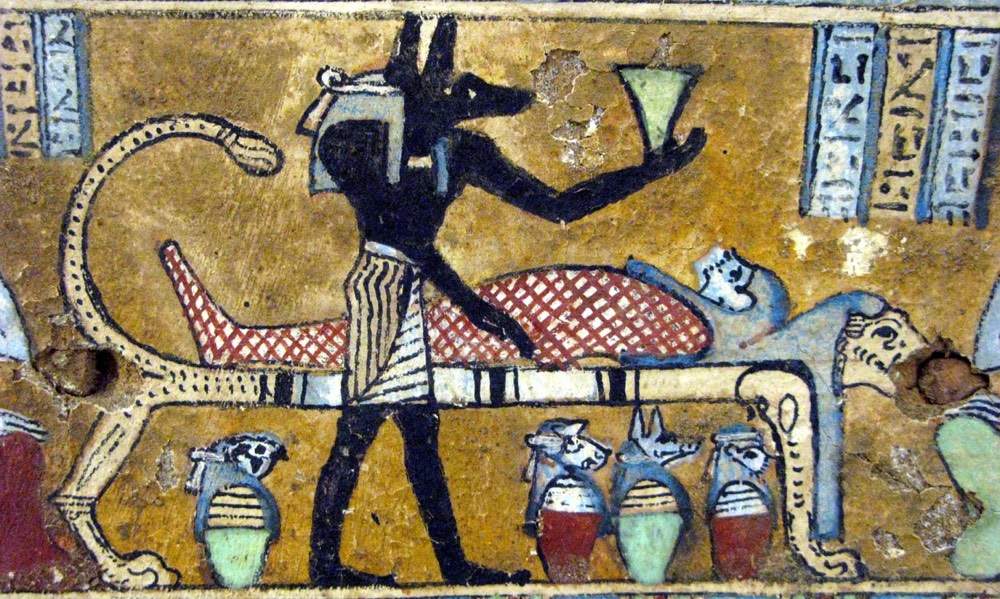
Preservation of the body was believed by the ancient Egyptians to be necessary to travel to the afterlife. They thought that the dead person would repossess their body and that it needed to be recognizable for this to happen.
It was most often done for more important or royal Egyptians because is was a special, expensive and time consuming process.
There were two steps to preserving the body for it’s travel to the Afterlife: embalming followed by mummification.
Without the body, the “Ka” or spirit could not return to the tomb to find the sustenance left by relatives and friends. The spirit would not be able to access the spells inscribed on the walls of the tomb or in the Book of Life papyrus buried with the corpse. These spells were essential for the “Ka’s” survival. If the body decayed and was unrecognisable the “Ka” would be lost, go hungry and the afterlife of the deceased would be jeopardised.
Anthony HolmesEmbalming
Embalming had many steps.
First the embalmers washed the body with ‘good smelling’ palm wine then to be rinsed with clean water from the Nile.
Second the embalmers would make a cut on the left side of the stomach to remove any internal organs. This was done because organs would be the first to decompose. The only organ they didn’t take out was the heart because it was thought to be the centre of intelligence and feeling and that the person would need it in the afterlife.
To remove the brain they would stick a hook through the nose and mash the brain then to pull it out through the nose again. After they would cover and stuff the body with natron that drys out. After forty days the body is washed with fresh water from the Nile then covered with oils to help the body stay elastic.
The organs are wrapped in linen and returned to the body. The body was then stuffed with dry materials to dry the inside of the body out and to make the body look life like. When the internal organs were separated from the body they were placed in canopic jars represented gods to protect them.
Mummification
Mummification followed embalming and involved wrapping and burial of the embalmed body.